THE GRANGE
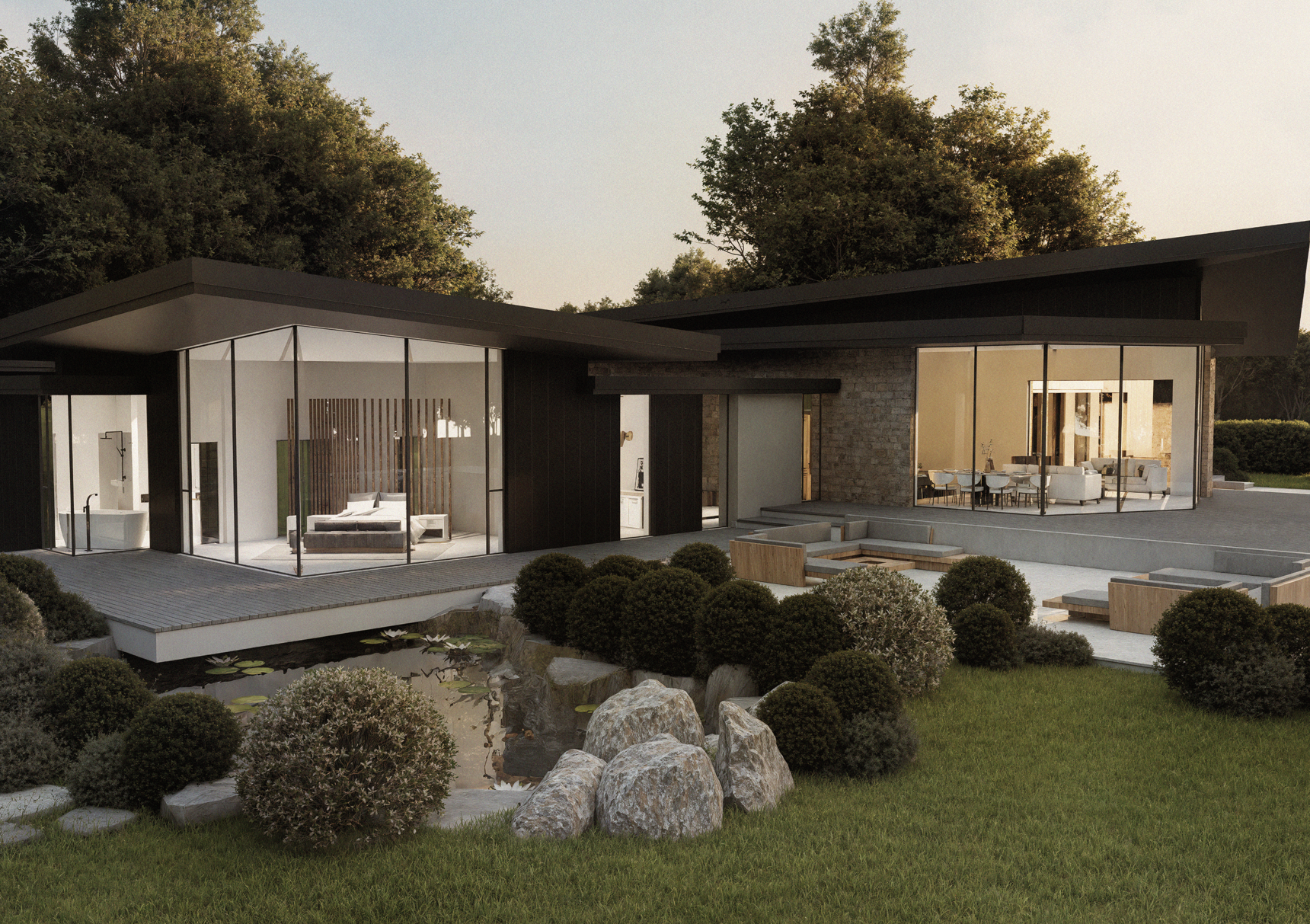
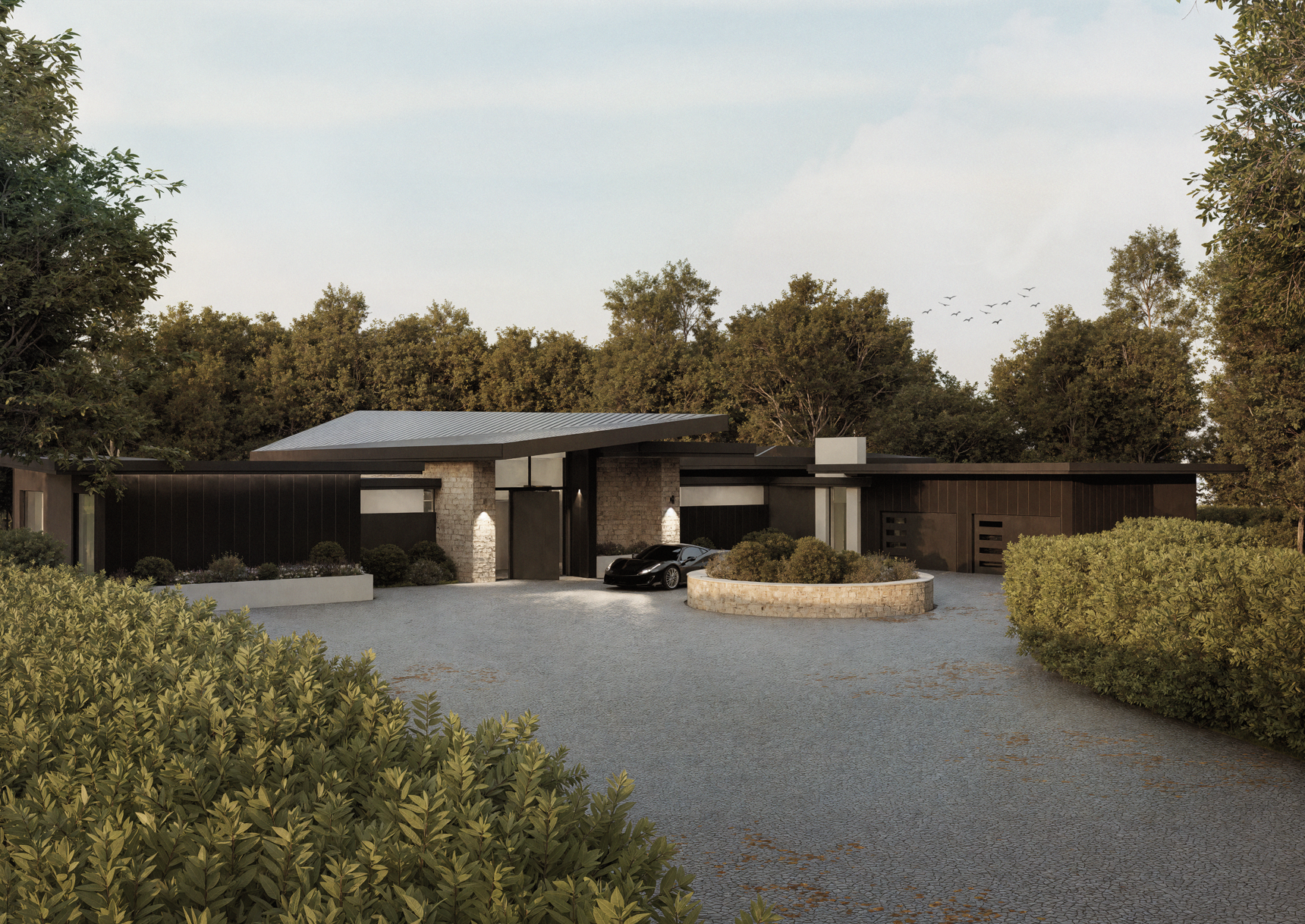
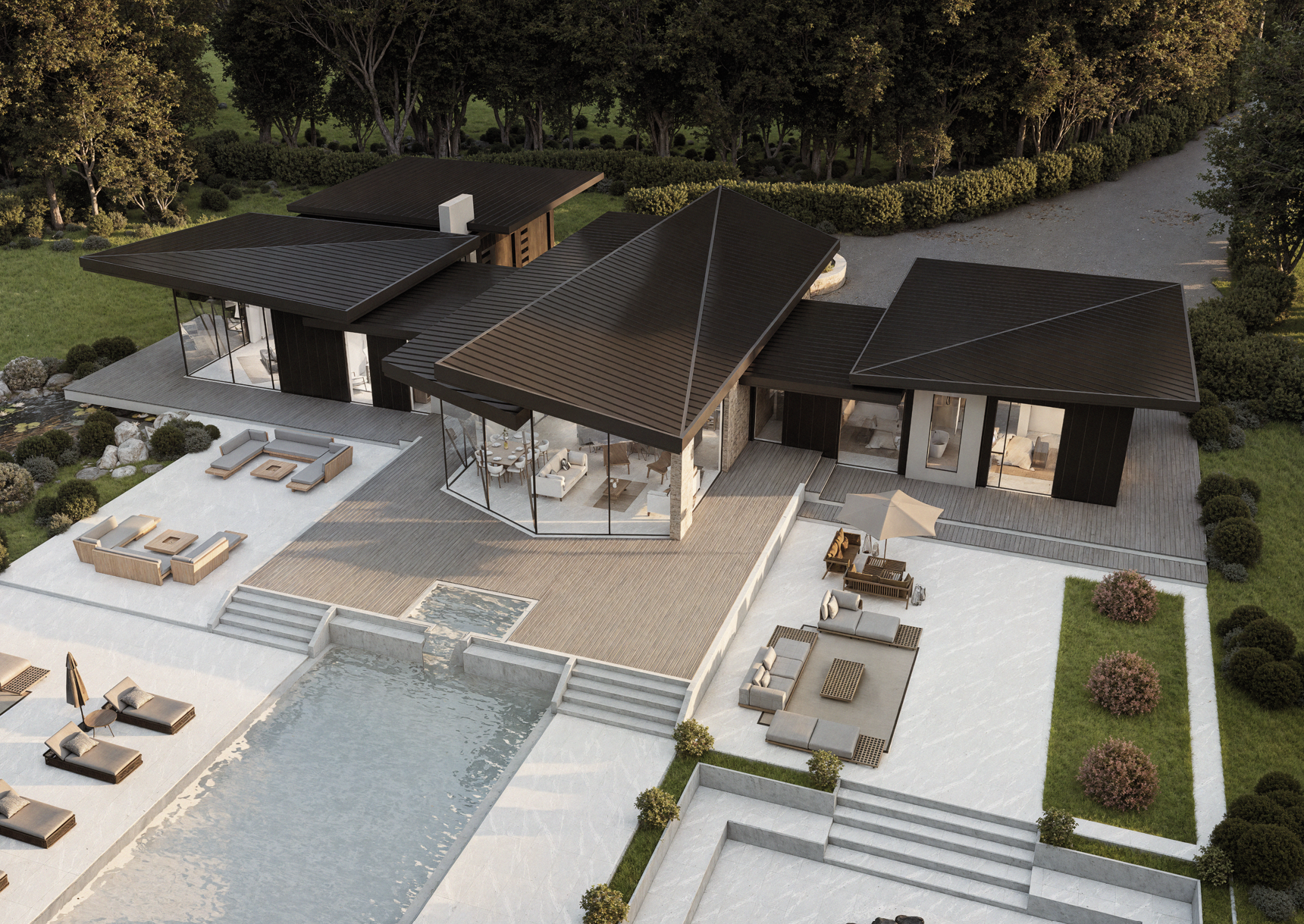
This new build in the Monmouthshire countryside is a single-storey modern family home designed to sit naturally within its setting. Its distinctive roof structure opens up to key views across the landscape while creating softer, more intimate spaces inside. Large glazed openings and generous terraces connect the interior seamlessly with outdoor living
Overview
The Grange is a carefully considered new-build home on agricultural land, developed in the context of existing, run-down agricultural buildings. The project demanded a low-impact approach and a robust planning strategy—balancing contemporary living requirements with the practical and policy realities that come with rural and agricultural planning.
The Brief
The client’s ambition was to create a high-quality, design-led home that would significantly improve the site’s built environment while remaining appropriate for its rural setting. Key requirements included:
A single-storey design to minimise visual impact and address planning sensitivity
A coherent approach to replacing/working alongside existing agricultural structures
A modern, functional layout with strong daylighting and spatial quality
A planning submission capable of navigating agricultural policy constraints and scrutiny
Design Response
Our design approach focused on producing a calm, grounded building form—one that sits naturally within the landscape and reads as a measured evolution of the site rather than an abrupt intrusion. Keeping the architecture to one level required careful planning of the internal arrangement to ensure the home felt generous, efficient, and well resolved.
The proposal prioritised:
Low-profile massing and controlled rooflines
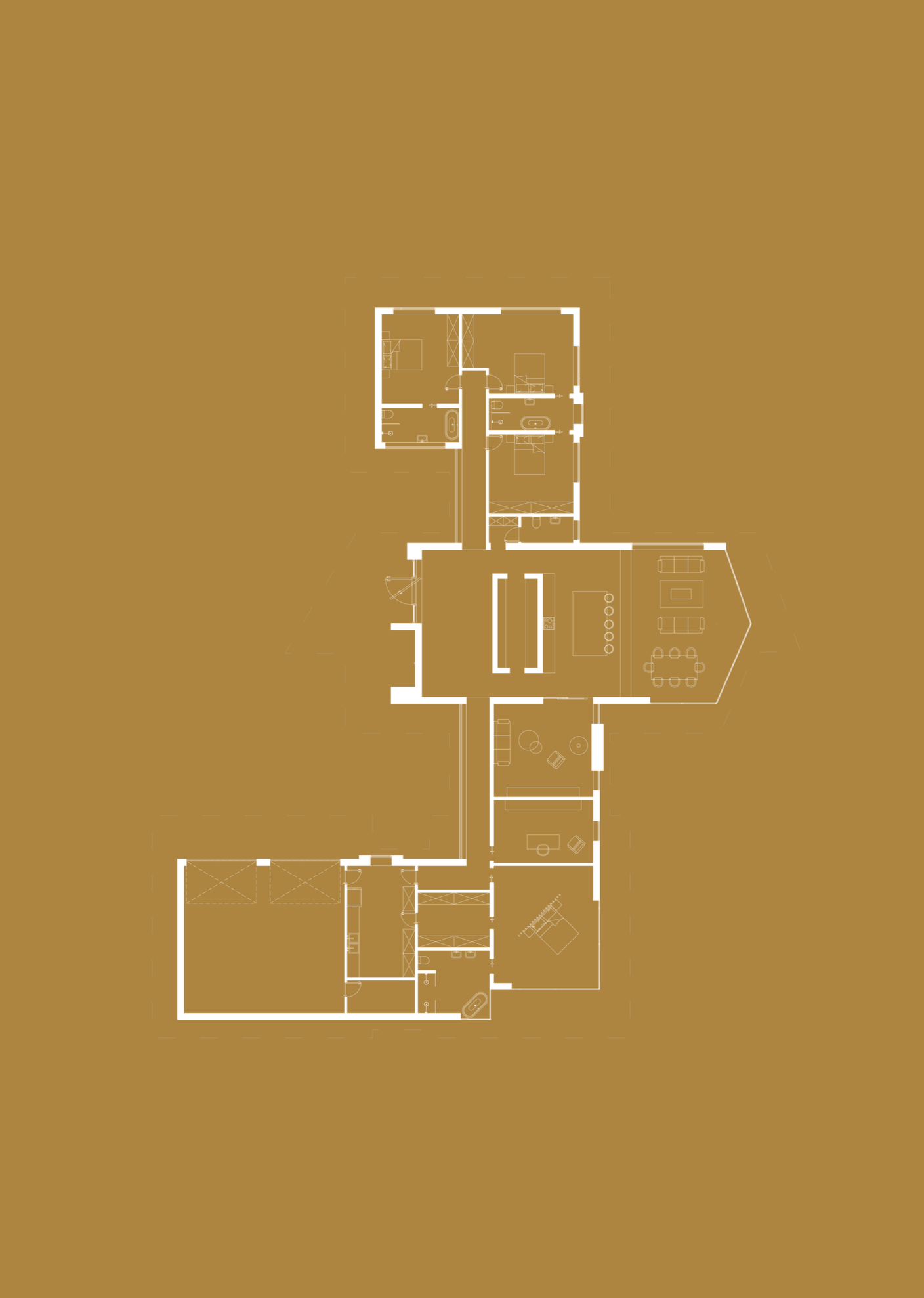
A legible, efficient plan arranged to maximise outlook and daylight
A restrained material and elevation strategy to suit a rural context
Buildability and clarity of information to support smooth delivery following consent
Planning Challenges and Strategy
Agricultural planning introduces a distinct set of constraints—ranging from policy justification and precedent considerations through to the relationship between the proposed dwelling, existing buildings, and land use. This project required a methodical approach: mapping risk early, shaping the scheme around likely pressure points, and presenting a clear, evidence-led narrative.
We developed the submission to anticipate common rural refusal triggers, ensuring the design was supported by proportionate justification and a coherent explanation of why the proposal was appropriate for the site.
What We Delivered
Site feasibility review and early planning risk analysis
Concept design and massing options aligned to policy constraints
Planning drawings and a clear design justification narrative
Coordination and submission support to manage the agricultural planning challenges
Iterative design refinement to maintain design quality while addressing planning feedback
Project Snapshot
Project Type: New-build dwelling on agricultural land
Form: Single-storey (planning-led massing strategy)
Context: Existing run-down agricultural buildings
Key Focus: Rural sensitivity, policy-led design, robust planning justification